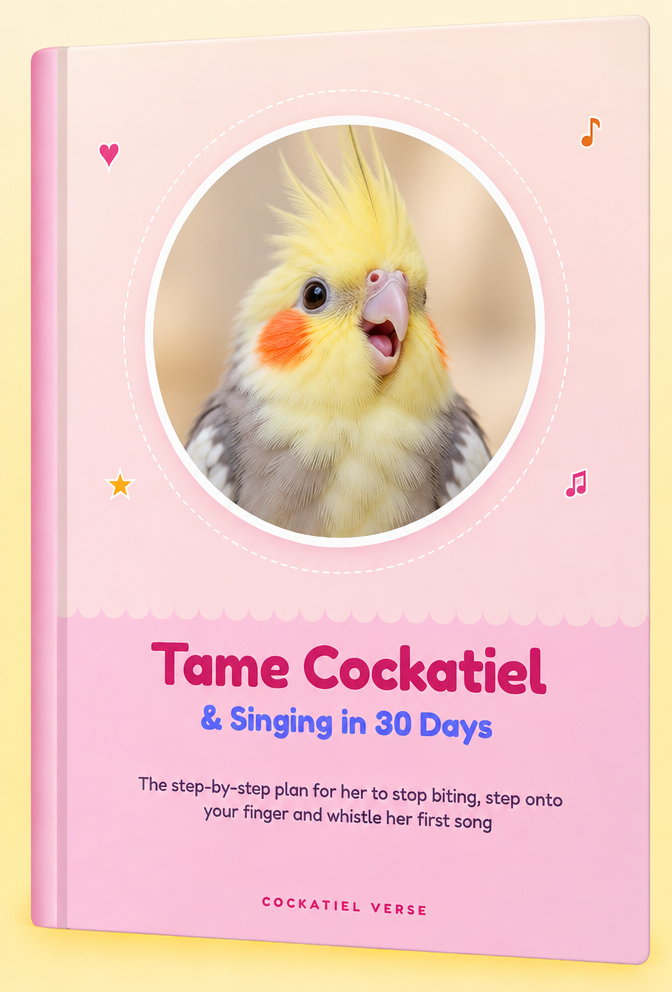
A tame, singing cockatiel in 30 days
No forcing, no grabbing. A simple day-by-day plan — just 5 minutes a day — until she learns your hand only brings good things… and greets you with a whistle.
- ✓Stops biting & panicking
- ✓Steps up on your finger
- ✓Whistles her first song
- ✓Avoids 7 deadly mistakes
one-time · instant PDF
Only
5 min/day
49
illustrated pages
30
days, step by step
5 min
of practice a day
7
day money-back guarantee
To her, your hand looks like a hawk
In the wild, cockatiels are prey. Anything big, fast and coming from above could be a predator. She isn't “mean” — she's scared. The good news: fear fades with calm, predictable repetition, every day.
- ✕She bites when you put your hand in the cage
- ✕She screams, hisses or flaps when you get close
- ✕She refuses to step onto your finger
- ✕She only chirps — no whistles, no songs
- ✕You don't know if what you feed her is safe
It's not your bird. It's the method.
01
Grabbing her “to get used to it”
Forcing contact confirms her worst fear: hands are dangerous. Trust drops for weeks.
02
Long, random sessions
Cockatiels learn in short, daily bursts. 1 hour on Sunday does less than 5 minutes every day.
03
Copying YouTube tricks out of order
Step-up before trust, whistling before calm… skipping stages is why most attempts stall.
This guide fixes all three: gentle, short, and in the right order.
4 weeks, one small step at a time
Each week builds on the last. You always know exactly what to do today — and what comes next.
Trust
She stops panicking and diving to the bottom of the cage when you walk in.
- •Reading her crest
- •Your calm presence
- •Voice routine
Hand-feeding
Millet becomes a reward and she eats straight from your fingers.
- •Millet on the bars
- •Hand in the cage
- •The magic millet trick
Step up
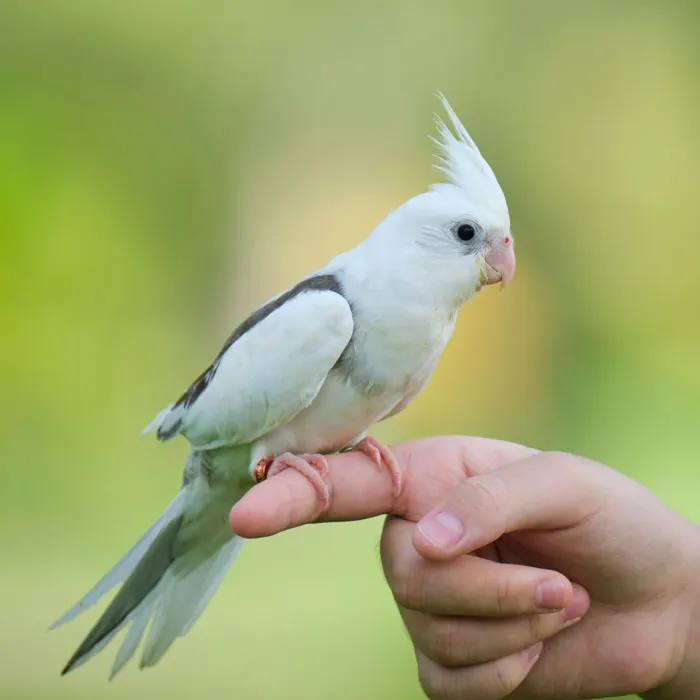
The first bite-free “step up” — and her first trip outside the cage.
- •The “Up” command
- •What to do when she bites
- •Little ladder
Cuddles
Head scratches in just the right spot, and she comes when you call.
- •Head scratches
- •Shoulder time
- •Come when called
Tame, singing — and safe
Part I
Tame in 4 weeks
Day-by-day plan: reading her crest, the magic millet trick, “step up”, what to do when she bites, shoulder time and scratches.
Part II
Whistling & talking
The 5-minute session, the first wolf-whistle, a full song, her own name and fun tricks.
Part III
7 dangerous mistakes
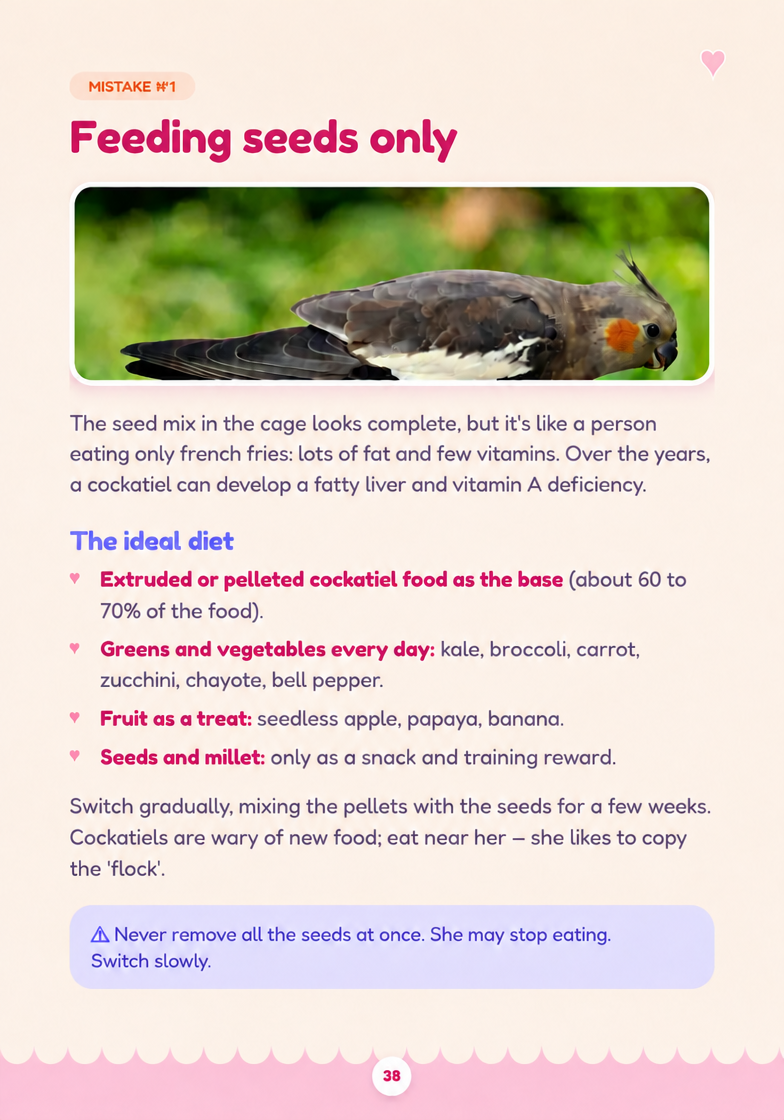
Seed-only diets, non-stick pans, toxic foods and other everyday mistakes that make her grumpy or sick.
+ Warning-signs checklist
Know when a fluffed-up bird means “sleepy” and when it means “see a vet”.
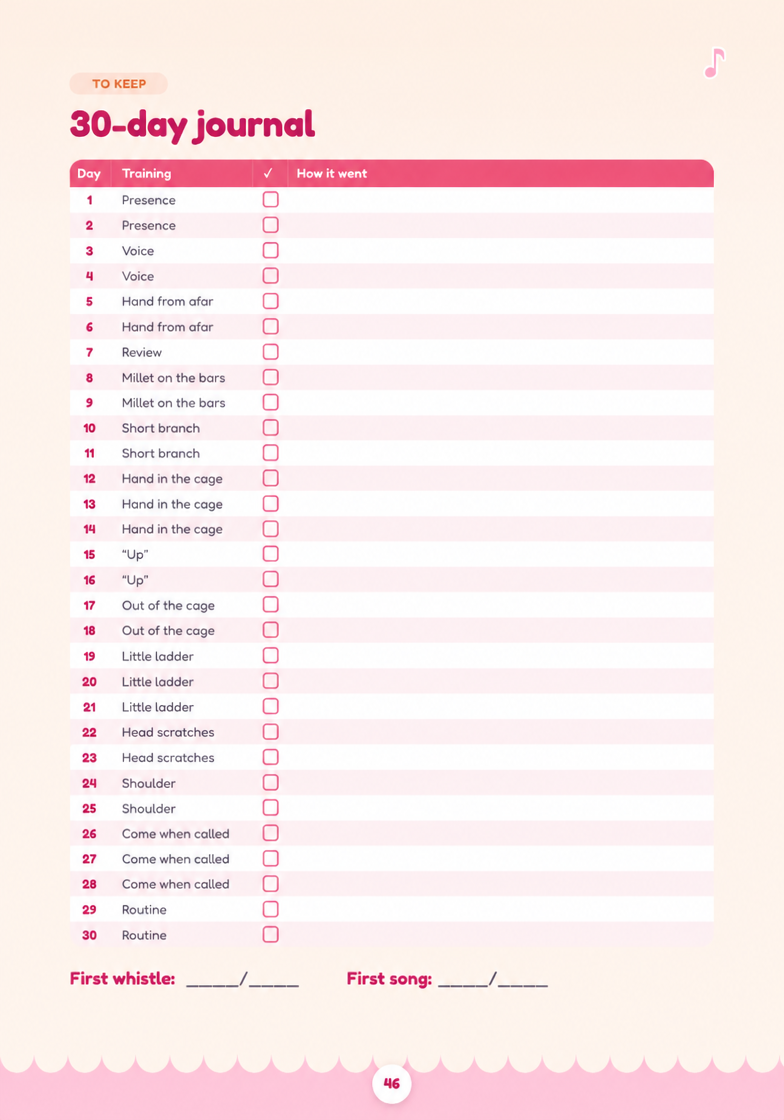
+ 30-day journal
Tick off each day and watch the progress add up.
+ Bird profile sheet
Her name, favorite treats, words she knows and milestones.
+ Safe & toxic foods list
What to offer, what to avoid — ready to stick on the fridge.
Cute, light and straight to the point
Short pages with numbered steps, tips and alerts. Easy to read on your phone, right next to the cage.
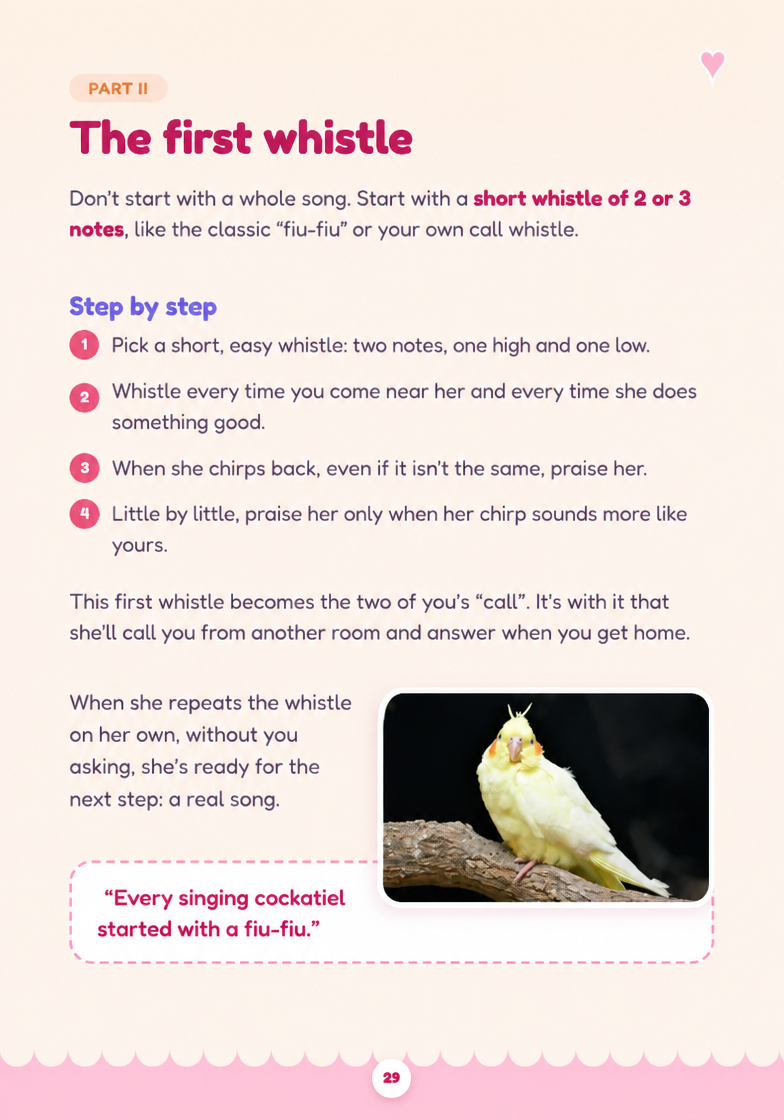
♪ Honest note: males are the main singers and talkers. Females get just as tame (or more) and learn calls, their name and tricks — and the guide has a section just for them.
Everything in one place, in the right order
Tame & Singing Cockatiel in 30 Days
- ✓4-week, day-by-day taming plan
- ✓Step-by-step first whistle, first song and her name
- ✓The 7 mistakes that make cockatiels grumpy or sick
- ✓Warning-signs checklist & safe foods list
- ✓30-day journal and your bird's profile sheet
One-time payment. Less than a bag of seed and a few millet sprays.
🔒 Secure payment · ♥ Instant access by email · ♪ Read on any device
7-day risk-free guarantee. Read it, try it with your bird. Not happy? Ask for a refund within 7 days and get 100% back, no questions asked.
Quick answers
How do I get it?+
Right after payment, your PDF access arrives by email. Read it on your phone, computer, or print it.
Does it work with adult cockatiels?+
Yes. Babies learn faster, but adults get tame too. It may take a bit longer, and the guide shows you how to respect her pace.
Mine is a female. Will it help?+
Absolutely. Taming works for males and females. For singing, the guide explains what to expect from each and has a section just for females.
My bird is very scared or was rehomed. Is it too late?+
No. Fearful birds benefit the most from a slow, predictable routine. Week 1 is designed exactly for them.
How much time per day?+
5 to 10 minutes, ideally in two short sessions. The secret is doing it every day.
Do I need special equipment?+
No. Millet spray, a perch or small ladder, and a quiet room are enough.
Does it replace a vet?+
No. The guide is educational. It helps you avoid everyday mistakes and spot early when it's time to see an avian vet.
What if I don't like it?+
You have 7 days to request a refund and get every cent back.
In 30 days, she'll whistle when you walk in
5 minutes a day. One step at a time. And a cockatiel who trusts you for life.